Unfinished Games: A Growing Trend

I never had the (dis)pleasure of playing No Man’s Sky on launch. Despite the massive hype, I decided to be frugal (and a responsible consumer) and wait until after reviews to purchase this game. Turns out I made the right decision. Most people I know couldn’t even launch the game. The few who could quickly refunded it, claiming the game was boring, grindy, and lacking many promised features.

Generally, when a game flops on it’s side like a dying fish struggling to breathe, it dies. As a fan of the MMO genre, I’ve seen this happen too many times to count (Bless, anyone?). No Man’s Sky spearheaded the current popular trend of releasing an unfinished game. Recently, this trend is best demonstrated by the hot messes that are Fallout 76 (Bethesda) and Anthem (Bioware/EA). This point of view can be pretty well summed up in one quote from Bethesda’s Tom Howard: “It’s not how you launch, it’s what it becomes.”

Upon first glance, the above quote seems reasonable. The majority of people I know constantly strive, or at least yearn, for some sort of personal betterment and growth. Having a game that grows better over time sounds fantastic! Having a game constantly improving and changing over time would only increase its fun factor, right? This is the keystone concept of live service games (besides the publishers scraping every ounce of money they can from the consumer, of course). However, games aren’t inherently a service. A game is a product that sometimes comes with a service. The service itself is useless without the product to go with it. That would be like going to a mechanic without a car. Because video games are a product first, the state of the game at launch is crucial. If we take Todd Howards statement at face value, then it’s okay to get a brand new car with a broken engine right? Even if the dealership fixes it at no cost, you are now left without a car while the one that SHOULD have worked from the beginning is being repaired. This situation shouldn’t have happened! But its okay, because the car is returned to you with a brand new functioning engine and happens to be freshly detailed, right? Maybe they even upgraded your seats to leather while you waited. So now you have an even better product, but that doesn’t change the fact that you had expected your brand new car to work and it didn’t.

Video games are a product first, not a service first. In order for a game to have the ability to improve over time in a way that’s relevant, it needs to have a solid base to build upon. Without it, a bad game is still a bad game. There are a multitude of games that start bad and stay bad and there are very few that start bad and end up great. Two of those are Final Fantasy XIV and (bringing us full circle) No Man’s Sky. No Man’s Sky has become a fantastic game, but I’m worried it’s successful rags to riches story has set a bad precedent for the industry.
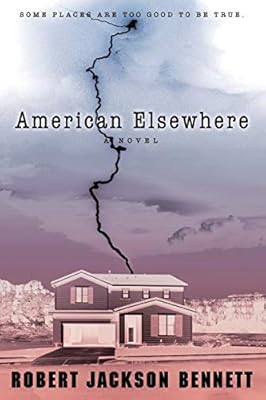
American Elsewhere – A Polarizing Twist on Cosmic Horror

A book review

With regards to this book, I’m the living embodiment of the warring subconscious trope (the one with an angel on one shoulder and a devil on the other). I discovered this book from a list of Lovecraftian influenced novels. However, after reading the book, the essence of true Lovecraftian fiction seems to be missing.

The first half of the book was exactly what I look for in Lovecraftian fiction. The fragility of sanity? Check. unfathomable creatures? Check. Human insignificance? Semi-check. The most important tenant of cosmic horror: the incomprehensible unknown? – check.

I can pick out the exact moment when the cosmic horror/Lovecraftian elements slipped away from the novel’s grasp. Before this particular moment, the book tossed us tempting bits of information. Enough to stave a bit of the reader’s hunger for knowledge, but not enough to fully satiate. There are enough blank spaces in the story for the reader’s imagination to take root. However, the particular moment previously mentioned completely destroyed any bit of mystery left in the novel, thereby removing the most important element of cosmic horror: the unknown. Worst of all, all of this background information and question answering was done in a massive narrative infodump of dialog. Not just any dialog, but a dialog produced by one of the supposedly unfathomable pandimensional creatures. NO. Just NO. Please stop. That scene in the book completely destroyed every single bit of mystery and horror more than half of the book had worked so hard to achieve (and had done so well).

From that point everything went downhill for me. The mystery was gone, the fear of the unknown was gone, but somehow it managed to get even worse. The monsters were *horrified gasp* relatable. I know, right? What sort of cosmic horror novel has relatable pandimensional creatures? I won’t spoil everything for future readers, but look forward to themes of motherhood (heavy, heavy, themes of motherhood. In fact, an entire 30 page academic paper could be written on the theme of motherhood contained within American Elsewhere) and narcissism.

Maybe the complete wanton destruction of the cosmic horror trope was purposeful. Perhaps it was a social or philosophical commentary. Perhaps it was trying to point out that fear has no purpose and the unknown is not actually incomprehensible. Everything is relatable. Also themes of sacrificing to be a good mother (I’m sorry, the whole heavy motherhood thing I found a bit eye rolling, but I have zero maternal instinct and find babies and small children loud and irritating so take my opinion with a grain of salt.)

Despite my distaste of the breakdown of Lovecraftian themes, I cannot give this book a low score, mostly because I found the writing to be darn good. Along with the main character, I became lost in this strange little town. I became embroiled in the mystery of the lab on the mesa. I became charmed by the unusual residents and their quirky behavior. Some of the characterization of certain individuals was inconsistent, but I suppose I can attribute that to their personal growth. Descriptions of various locations along with “distortions” in reality were visceral and visual.

Overall, I’d recommend this novel to anyone who isn’t looking for traditional cosmic horror, especially those looking for an introduction to the genre while still getting a desired story resolution.

Well done, Mr. Bennett. Just please leave some mystery next time.

The Testament of Sherlock Holmes Liveblog #1

Super Serious Theory: The Children are Aliens

Several years ago I played about two hours of this game. I remember almost nothing about it. So Steam Roulette gave me this lovely to play. It’s immediately the most horrifying game I’ve played yet this year. The children in the opening scene are the scariest monsters I’ve ever seen in my entire life. The “lalala” singing sounds send shivers down my spine. The little boy looks as if he was ripped right out of Children of the Corn. So either they are evil demonic beings or aliens. I have no idea which.

Okay, I’ll try to give them the benefit of the doubt. But where are their parents? I’m not one for helicopter style parenting, but these kids could really use some observation as they are just. so. accident prone. Perhaps this is just the aliens getting used to their new skin suits. One cuts her finger in a drawer (luckily they are aliens so she shouldn’t get tetanus). Another stumbles over (like a drunk) to a marionette and precedes to rip it from the wall and fall down with a yell. Destruction of private property is not acceptable! My money is that they are also trespassing (also illegal, might I add…we both know that but apparently aliens don’t). These aliens need to study human mannerisms better before coming down to the planet to do their mischief.

The aliens sit down to study a human relic: a book. The leader alien apparently learned how to read English at some point in its studies. Thus the story begins…..and I can only hope the aliens never reappear.

A Deadly Sin of Reading

Lunch break. The short hour of relaxation punctuating an otherwise chaotic day. My stomach pleasantly full of pesto panini, I decided to read with my remaining spare time. Another half hour and I’d be back in the metal jungle that is my physical chemistry lab.

So what the heck happened to my reading time? What made me give up the epicness of my favorite fictional universe to bang out some words on a screen? Well, I did a bad. Forgive me readers, for I have sinned. Please hear my confession.

I read ahead.

I know, I know, I’m a terrible person. Hear me out. The current main character of the story had just drank some extremely viscous alcohol at a bar in one of their newly conquered territories. The viscosity of alcohol should not be that high without additional ingredients inherently changing the physical chemistry of the liquid. For example, poison. Suddenly I had convinced myself that this character was about to croak. I HAD to know if my theory was right. Before I could think logically and stop myself, I had skipped three paragraphs. All for nothing. He didn’t die. Not in that moment, at least.

This is not the first time I have committed this sin. I think I do it at least once whenever I read a book in which I am invested. I just can’t take the suspense and HAVE to know what happens so I can actually relax and read instead of being worried and stressed. By doing this, I unfortunately miss out on the high intensity of the scene. The book inherently loses something that it once had: the ability to convey suspense. By following my compulsion, I deny myself something greater. Isn’t that just typical?

Going forward, I’m going to make a conscious effort to not do this any more. Does the dog die? I guess I’ll wait and find out. Does our favorite character make it up the impossibly tall cliff face to rescue the princess? Who knows. Let these questions remain a mystery until the story wills it otherwise. Relax, let go of control, and let the story carry you away. You won’t drown, I promise. Now if only I could convince myself…

The Paradox of Choice: The Curse of a Steam User

I still remember the day I first heard of Steam. I was lamenting to my MMO buddy about the bad experience I had buying games on Amazon (this was before keys became popular). I wanted to get my hands on a copy of this little game called Skyrim. You might have heard of it. He recommended Steam, as there was currently a game sale going on at the time. I quickly downloaded the program, stepped into the colorful storefront, and fell into the bottomless pit that is a Steam Sale.

From Steam sales, to free keys from friends, to Humble Bundles, I quickly amassed a massive Steam library which has only grown over the years. Sometimes I scroll through my games list and am surprised I own a certain game. Apparently I own Mad Max? Man, I’ve really got to play that one day. But do I? No. Instead I scroll through this massive list, trying to figure out what to play and end up going back to one of my old favorites (which is currently Darkest Dungeon and No Man’s Sky). I suffer from Gamer Paradox of Choice. Analysis paralysis, as we call it in the board game world. Choice overload. When faced with 380 unplayed games, I tend to stick with something I’ve played already. Perhaps subconsciously it is because I know I’ll enjoy the tried and true games. But consciously, I’m a big proponent of gaining new experiences and trying new things. Including new games. Playing a bad game won’t have any detrimental effect on my life other than wasting my time. Yet it is a choice I cannot make. WHY?

I don’t know why I have this problem. But I decided to take a page out of the EA handbook and try some SURPRISE MECHANICS. Thanks to some googling and Redditing, I found a Steam game roulette. You just type your user name in and in a few spins of a wheel, you have a game from your library selected for you to play. And with that I began my trek deep into the dirty dredges of my Steam backlog.

Game 1: Fractal: Make Blooms Not War:
Okay. I’m going to be honest. I’m an action games sort of person. Give my character a gun or even better, a few swords. At least a flashlight. Oh come on!
Fractal is not that sort of game. It is a very relaxed puzzle game, where pleasant music and colors dance along your senses as you click spots on the screen, trying to fill out areas. There is no one impeding your way except yourself (and the increasingly difficult levels, which unfortunately cannot be cut by a sword). Needless to say, this game is not for me, but its definitely for someone. Do I regret trying it? No. Will I ever play it again? No. Time to go back to the random steam game selector.

Game 2: Medal of Honor Single Player Campaign:
I would have NEVER played this game if the random game selector hadn’t chosen it, and I would have been missing out on something fantastic. Sure, I ran into several mission breaking bugs, but everything else was fantastic. The shooting was weighty and felt great. The different mechanics in each mission prevented the game from feeling stale. The short length was perfect for someone who works and doesn’t have a massive amount of time to dedicate to gaming. The story itself was riveting. One time I actually cheered out loud when I heard the sound of a radio buzzing, I was about to be rescued out of a certain death situation. Another part of the story pulled on my heartstrings. I almost shed a tear. Almost.
I don’t know how realistic a story this is, but I did come out of the campaign with a newfound respect for our servicemen.

Steam roulette to be continued…

A Fresh Eye on No Man’s Sky

When I first started hearing a buzz about the current state of No Man’s Sky, I was skeptical. On release, reviewers slammed the game for lacking content (especially promised content, such as multiplayer), repetitive and grindy, predictable and shallow. But now, Steam describes recent reviews as “mostly positive” rather than “overwhelmingly negative.” The game has streamlined gameplay, added different game modes to cater to a wider variety of tastes, added multiplayer and basebuilding, and increased the variety of planets. Despite all of the updates, is the game really worth playing now? Like I said, I was skeptical.

I bit the bullet several weeks ago when the game went on sale for $30. Sixty dollars is a bit too much of a gamble, but I can justify buying a “meh” game for $30. Just this week I finally got around to installing it, in the meantime still skeptical, but also a bit excited. I’ve always loved the heck out of space exploration games (Elite Dangerous in VR is my jam!) and this game added terrestrial exploration to the space exploration I was accustomed to. I was ready.

The load screen of stars flew by as the shaders loaded very verrry verrrrryyyyyy slowly. Much like my computer loading, my character came to very slowly, blinking in the blinding desert light. Who was I? Where was this? Why was I here in this barren wasteland of scorching heat? I had many questions but no answers. Nor did I really have time to ponder existence, as the sun was slowly cooking me in my spacesuit. I had to find some sodium quickly to recharge my suit hazard protection. Despite being on a dirt brown scorched wasteland, minerals and hardy cacti-like plants were scattered throughout the landscape. So I survived, scrounging on what little I could until finding my way to my spaceship. Unsurprisingly it was a broken mess, needing repairs in several places. Repairs, of course, consisted of gathering resources or going to a nearby outpost. After my ship was repaired and fueled up, I blasted up into space and careened towards the real meat of the game.

After taking off and being greeted by a plethora of stars (and the intimidatingly massive galactic map), I headed towards a nearby space station inhabited by sentient frogs named Gek. They taught me some of their language, I upgraded my suit inventory, changed my appearance, picked up some navigation data that some forgetful person left on a table (Is person even a correct term? What does one call a frog anyway? I only know 35 Gek words so I’m hardly an expert on proper etiquette), and even picked up a quest from a random Gekfella (not an official term, just my own endearing nickname for these slimy cuties).

After my brief space station adventure, I headed down to a nearby rocky planet. It had a temperate atmosphere, so hazard protection wasn’t necessary. On that planet, I found some strange box like relics underground, found alien artifacts that taught me more Gek language, gathered rare resources, dug holes in hills for funsies, unearthed buried technology (which you use to unlock blueprints for base building), found outposts, both abandoned and stationed, started building a cute little base, and scanned every plant, animal, and mineral I could find. All this on one tiny planet. Getting anything done in this game is IMPOSSIBLE unless you possess some sort of insanely strong impulse control, which I quite obviously do not. At one point I was trying to gather materials to craft an upgrade for my exosuit. On the way to gather material, I found a crashed freighter, an armored salvage container guarded by three aggressive robots, dug up some ancient ruins , and even followed a particularly interesting creature taking screenshots (the seven foot tall creature had a turtle shell on its back with turtle back legs but antelope front legs with a tiny little head the size of a human hand…I know, right?!), . At some point I completely forgot what I had set out to do in the first place.

I almost wish I had played No Man’s Sky at launch, just so I could comment on how far it has come. This is by far the best survival game I’ve ever played. Gathering resources never feels like a chore, the basebuilding is extremely dynamic (just look up some of the player bases that have been posted to various forums), and getting upgrades feels extremely rewarding. Actual space flying and combat feels a bit clunky, but I’m used to the intuitive nature of using a HOTUS ( Hands On Throttle-And-Stick for any non ubernerds reading – its like a joystick but also with a throttle lever) but am currently using an xbox controller (turns out HOTUSs are pretty useless for on foot exploration, who’d have thought?). So far the exploration is still interesting even after 20 hours. Having a procedurally generated universe, I can see how planets might start to look similar eventually. My hope is with the upcoming Beyond update they add additional variety to the planets, keeping everything cool and fresh.

No Man’s Sky isn’t a sandbox game. It’s a massive beach of a game, sand stretching as far as the eye can see, teal waters lapping at the shore. So sit back, relax, have a mojito (or a margarita if you prefer) and enjoy the adventure.

Return to Homeland

Part 1: Are Disliked Books Worth Revisiting?

There are two sides to this argument, both of which have occurred in my head simultaneously. On one hand, life is too short to waste time on bad books. For any avid reader, including myself, multiple lifetimes would be needed to read the entirety of one’s backlog/wishlist. Why waste that precious time on a disliked book? I agree with this thought process provided the book is badly written or utter trash.

However, sometimes a book enters our lives at the wrong time. Perhaps we aren’t in the right mindset for it. Perhaps we have not yet experienced any life events that make the book relevant and relatable. In cases like this, perhaps that previously disliked book is worth returning to at a later time. This is the situation I’m in with Homeland.

The first time I read Homeland, I thought it was okay. For a highly lauded book in the “nerd” community, I didn’t think it was anything particularly special. The quality of writing was average, the characters a bit flat. Nothing about the world building drew me in. Perhaps the writing is just mediocre. Or perhaps I read these books at the wrong time.

The Dark Elf Trilogy (starting with Homeland) takes place in the Forgotten Realms setting, which is one of several original settings for Dungeons and Dragons. Various tabletop campaigns and video games have taken place in this particular universe, making the lore immense and expansive. Of course, the first time I tried reading this series I had never been exposed to either the tabletop RPG or the video games.

Fast forward about 5 years. By now, I have played multiple video games based on D&D (including Pathfinder: Kingmaker, Baldur’s Gate, and Icewind Dale) and I’ve been a D&D 5th Edition dungeon master for over two years (and a player for four). I watch Critical Role like it’s religion and I am a complete sponge for D&D lore. If any time is the right time to revisit the Dark Elf Trilogy, it’s now.

I’m only on page 18, so I have yet to make any significant judgments on the book. I was, however, very excited to run into bugbears and shriekers. If a mantle, piercer, or roper shows up I’ll be ecstatic because those are creatures I’ve actually used in my game! If an aboleth shows up, I’ll just die of happiness (I used a version in my last session that caused an epic total party kill. Yes, I am a brutal DM. But it all worked out because my players made a Faustian deal to return to life…). We have yet to see if the nostalgia and familiarity factor is sufficient to overcome any mediocrity.

Going Old School with Divine Divinity

Day 1: Lesson Learned

With all the turmoil in the industry sometimes it’s nice to get into our TARDIS and travel to a time when things were a bit simpler. Sadly, I don’t have the time traveling sort of doctor in my life, so when I’m feeling the tug of that old nostalgia it’s time to dig deep into the dark recesses of my Steam and GOG libraries. This time, I emerged from my quest with Divine Divinity. You may have heard of a little game called Divinity Original Sin. Divine Divinity is the ancient ancestor of the fantastic modern title.

The game started with a rather confusing cutscene involving some cultists, some glowing female humanoids that may or may not be goddesses (trust me when I say all this was extremely unclear), and a nice looking hunk of stereotypical fantasy muscle who is very clearly Conan the Barbarian. Yes, it’s definitely Conan, despite Larian not owning the Conan license. Headcannon is real cannon. Fight me. Anyway, dear Conan got wacked by some super powerful light goddess juju and a nice kitty found him. I’m being literal here. He was rescued by a cat.

Okay, time to select a character. Like most old school games, I couldn’t customize my appearance. I had the choice of a static male or female survivalist, mage, or warrior. After dabbling in a few other old school RPGs, such as Icewind Dale, I don’t trust magic any more, I’m not a fan of rogues, so I chose the good old bread and butter warrior. I picked the scantily clad female one, Conana the Barbarian, whom I lovingly refer to as Xena. Me as Xena wakes up in some creeper’s basement. Of course this self professed healer “claims” a cat found me (apparently cutscene male Conan is genderfluid and turned into Conana. I’m so proud.) and he rescued me, healing my wounds. So that was nice and all, but I still maintain that keeping Conana in a basement when there’s a perfectly good bed on the first floor majorly sketch. Who knows though, maybe she fell on top of some fresh cow pies (that’s polite language for poop for you non country folk) and carries too much of a stench for anyone with nostrils.

After wandering through town, finding a magical healing shrine, stealing the last healing gem, finding out that the magical source of healing is broken, catching the shop keeper getting extorted, stealing some herbs, raiding some empty houses and breaking a bunch of barrels, I found myself overhearing some juicy drama between the mayor and his assistant. Apparently the mayor has gone majorly schizophrenic (this isn’t an insult, he’s literally hearing voices and seeing things). He goes so crazy mad that he freezes his assistant who I then have to rescue. I go through the basement hidden in the well (apparently no townspeople have noticed the lack of water in the well…????…), convince the major to unfreeze this fellow, then once all is right in the world, go back to my exploration. I found another cellar, enter….and promptly get cut down by a nasty skeleton. Yup, dead. I go to load save and………..yup. That’s right. Old school games don’t really autosave. By my stupidity, I lost ALL of my game progress. Instant rage quit.

The point of the past paragraph was to explain everything I had done in the game that I lost. It was over an hour of gameplay. So let this be a lesson to everyone: SAVE YOUR DAMN GAME. Don’t be like me. I’m a terrible role model.

PEACE.

Games as Apples: A Metaphor About the State of the Gaming Industry

For those of you who are not gamers or do not keep up on gaming news, the news recently has been tumultuous. Currently, game publishers have been honing in on a new trend: games as a service, also known as live service games. The basic idea is to create a game that is constantly evolving and being updated as people play. Think less The Witcher and more World of Warcraft without the monthly sub. Sounds great right? Perhaps in an ideal world, but alas, we live in the world of extremely greedy AAA game publishers. The best way I can explain the current state of live gaming is with a metaphor.

Say you love apples and always have loved apples. You enjoy trying new apples. You hear about a brand new type of apple that is about to go on sale. The pictures make the apple look mouth watering; the skin a juicy combination of green and red and the flesh inside a creamy white. The creators have touted eating this apple as a completely unique experience. You wait a couple of months, maybe even a year, then you hear that the apple is finally being sold at your local supermarket! So you happily drive to the store where a representative of the company is offering these apples. Except the apples aren’t the red and green from the picture. They are grey. The representative of the company tells you that you have to pay extra for the red and green apples, pointing to a display behind her. They look really great, but are an extra three dollars! The representative tells you not to worry, the apples still taste the same.
You buy the grey apple and bite into it and it is completely tasteless, perhaps even a bit mealy and dry. This is not the apple they had advertised! The representative tells you that the apple hasn’t finished developing yet, but they plan to improve it over time. So why exactly did they start selling the apples before they were ready?
Time goes by and the creators have starting selling a second version of the apple. You buy another grey apple as the colorful ones still cost several extra dollars. The juiciness has improved but the texture is still off. Over time, the creators keep selling new versions of the apples, and you keep buying them in hopes that one day the apple will be the one they promised to deliver on. However, other customers get tired of buying these apples which aren’t as good as the classic favorites, so they stop buying them. Eventually the creators aren’t making enough money and have to downsize the company. Suddenly the “new” apple stops getting better. The company stagnates and eventually goes out of business.

In the above metaphor, the color of the apples are cosmetic only microtransactions (which cost your actual hard earned real life dollars), things like skins and customization for your character, finishing moves in fighting games, and tags or sprays in games like Overwatch. Some games even have loot boxes, which is like drawing an apple blindly from a bag. Cosmetic items aren’t terrible as they don’t really impact the gameplay. Some games, however, have items you can buy that impact gameplay. For example, repair kits or tools in Fallout 76. Since these kits aren’t available in game, the only way to get them is in the shop. Sure, you can pay for them with special currency earned in game (ATOMs), but gaining that currency is extremely slow. Why is this cash shop system even needed in the first place? Why not just offer the repair kits for normal game currency (bottlecaps)? I can only come up with one answer: corporate greed.

Cash shops and microtransactions aren’t the only issue plaguing “live service games.” The games aren’t even being released complete! Some notable recent titles include Fallout 76, Anthem, Black Ops 4, and Battlefield 5. Fallout 76 was released with a plethora of game breaking bugs. Anthem was released missing loads of content promised at E3. Heck, the game didn’t even LOOK the same. Currently, Anthem’s endgame consists of a handful of missions. That’s it. After a disastrous launch, Bioware released a roadmap/timeline for planned content releases. They missed almost every single one of the deadlines. DEVELOPERS, CAN WE PLEASE STOP RELEASING UNFINISHED GAMES AND CLAIMING THEY ARE “LIVE SERVICE?” Using live service as an excuse for an unfinished game is pathetic. Using live service as an excuse for needless microtransactions is just greedy.

Players see what you are doing, publishers, and no one wants to play a buggy unfinished game. Of course who gets laid off when a game fails? Not the people responsible for the bad decisions. No, they lay off the poor employees who are doing the best they can, working 100 hour weeks (yes, overworking employees is also a common issue in big game companies), and following mandated instructions from management. Instead of figuring out another solution (like not being a bunch of greedy jerks), the decision making executives fire the hard working grunts but keep getting fat executive bonuses. Ahem Bobby Kotick ahem.

I am beyond sick of the corporate greed that has infected the games industry. Unfortunately, it’s probably going to get worse before it gets better.

My Unusual Inspiration

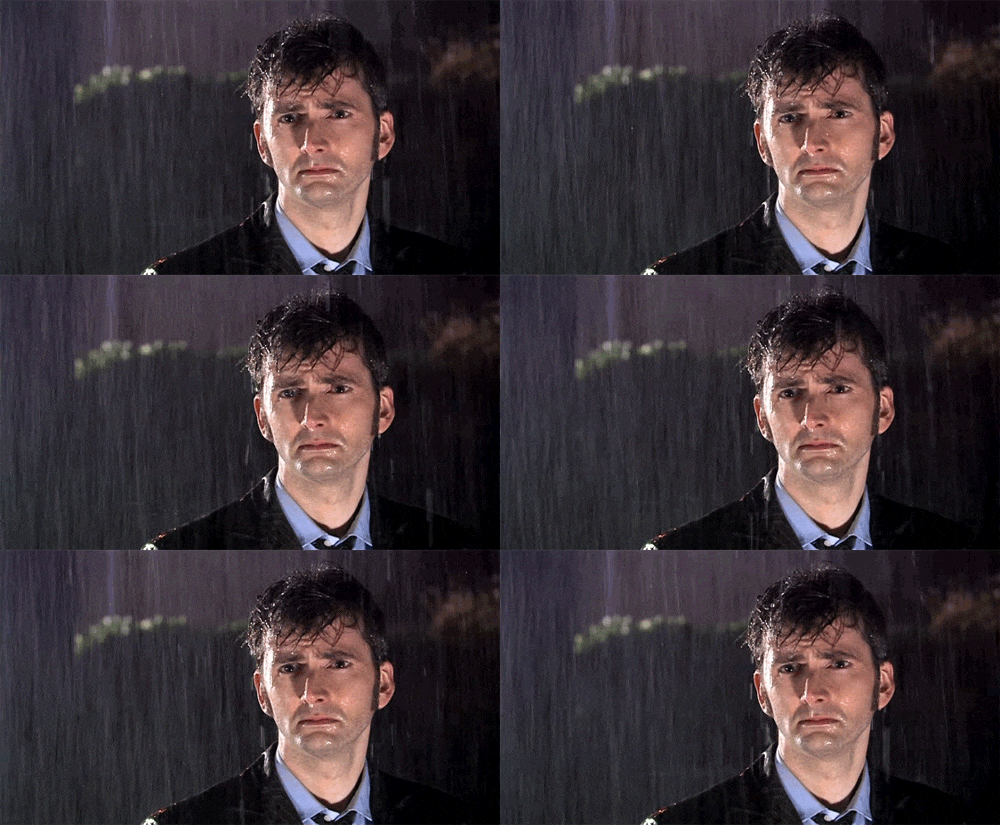
I have an undeniable dislike of GIFs. Not the file format. I’m talking those little animated pictures that loop. Like this one of the lovely David Tennant as Dr. Who.

As much as I love the Doctor (especially Tennant Doctor), holy potatoes this is distracting!!! On pages saturated by animated GIFs (which are usually even more distracting than this one), my eyes are continually drawn to the moving pictures rather than the significantly more important text. The most atrocious examples of this involve book reviews like this: https://www.goodreads.com/review/show/340987215?book_show_action=true&from_review_page=1
I’m sure its a great review, but I can’t get past the first two paragraphs because of the accursed animated GIFs.

So what does this have to do with me creating a blog? While I was perusing the internet, desperate to find some other souls who hate these damned images as much as I do, I found a blog post about book review trends. The first trend were animated GIFs, but the second was liveblogging. Me, being a book reviewer and a writer, was intrigued and decided to start my own blog. However, as someone who, in addition to reading, plays video games, board games, tabletop RPGS, and watches TV/movies, I figured I’d make this as more of a general nerddom blog with some liveblog posts (which I will tag appropriately).